English
 Español
 عربى









1.Introduction to AC Drives (Variable Frequency Drives) In the realm of modern industrial control an......
READ MOREHome / News / Industry News / Vector AC Drives Explained: How They Work, Where They Fit, and How to Choose
Vector AC Drives Explained: How They Work, Where They Fit, and How to Choose
Vector AC drives are often described as variable frequency drives with a smarter control layer. That is true, but it undersells the effect on the motor. Instead of following a fixed voltage-to-frequency curve, a vector drive estimates the motor's magnetic flux and torque and adjusts the output to keep both in balance. The result is stable speed under changing load, useful torque at low speed, and a softer start than direct-on-line operation.
Whether you are retrofitting an existing pump set or specifying a drive for a new conveyor, the practical questions are similar: what does vector control change, where does it pay back, and what should you check before you buy?
Content
- 1 What Makes a Vector AC Drive Different?
- 2 How Vector Control Works in Practice
- 3 Why Vector AC Drives Matter on Real Loads
- 4 Where Vector AC Drives Fit Best
- 5 A Practical Selection Checklist
- 6 Commissioning and Maintenance That Prevent Surprises
- 7 Common Mistakes to Avoid
- 8 A Drive Is Only as Good as Its Setup
What Makes a Vector AC Drive Different?
A conventional AC drive has a rectifier, a DC bus, and an inverter. The rectifier turns incoming AC into DC, the bus smooths it, and the inverter switches it back into a controllable three-phase waveform. What separates a vector drive is the control method. It measures motor currents and uses a motor model to separate the current into flux-producing and torque-producing parts, then regulates each part independently.
Scalar V/Hz control is simpler and still useful for predictable loads. Vector control adds feedback and a motor model, so the drive can hold speed when load changes and produce stronger torque at low speed without an oversized drive.
| Control method | Speed regulation | Low-speed torque | Typical fit |
|---|---|---|---|
| V/Hz scalar | Moderate | Limited | Simple fans and pumps with predictable loads |
| Sensorless vector | Good | Strong | Conveyors, mixers, fans, pumps, general machinery |
| Closed-loop vector | Excellent | Full torque near zero speed with encoder | Cranes, winders, machine tools, precise positioning |
The table is a starting point, not a ranking. The right choice depends on the load, the speed range, and how much tuning the application can support.
How Vector Control Works in Practice
Inside the drive, current sensors measure two motor phases while the DC bus voltage is monitored. The controller uses these signals to estimate the motor's magnetic state. It then calculates the switching pattern needed to keep flux at the right level while delivering the torque the load demands.
A sensorless vector drive estimates rotor position from the motor model, so no encoder is needed. A closed-loop vector drive uses encoder feedback instead, which gives better performance at very low speed and during rapid torque changes.
Sensorless or closed-loop?
- Choose sensorless vector for most pumps, fans, conveyors, and mixers where cable runs and cost matter.
- Choose closed-loop vector when the load must hold torque near zero speed or follow a precise motion profile.
- Check the motor's minimum speed and cooling before assuming full torque is available across the whole range.
Auto-tuning is not optional. Entering correct nameplate data and running a motor tune gives the drive a usable model; skipping that step often leads to poor low-speed behavior and nuisance trips.
Why Vector AC Drives Matter on Real Loads
Vector control earns its keep when the load is not steady. A fan damper may open, a conveyor may suddenly carry more material, or a mixer may meet a thicker batch. The drive responds by adjusting torque while keeping speed close to setpoint.
- Stable low-speed torque for starting and jogging.
- Faster recovery after load changes.
- Lower starting current and less mechanical shock.
- Better process control and energy savings on variable-torque loads.
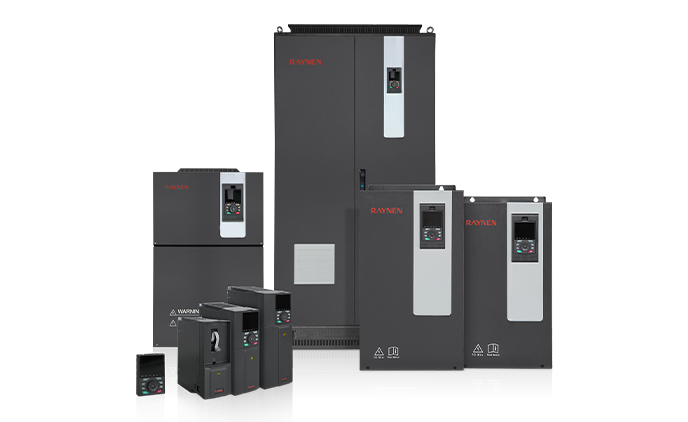
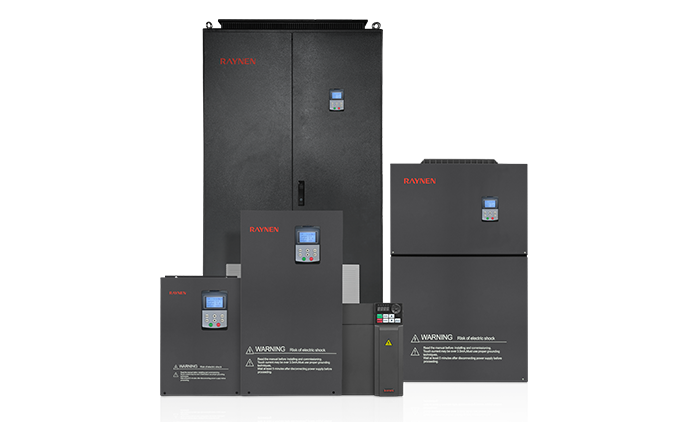
For tasks that need strong low-speed torque and fast settling without an encoder, a sensorless vector drive is often the practical choice. Our RV32 series is one example: it is built for demanding industrial loads and supports the tuning and I/O that panel builders commonly need.
 RVE32 Series Sensorless Vector AC DriveThe RVE32-T3-45G/55P is a 380 V, 45/55 kW sensorless vector VFD for demanding industrial loads and quick recovery after sudden load changes.View Product →
That matters on a press, extruder, or conveyor that must recover quickly after a sudden load. It also matters during commissioning, when a drive that models the motor well is easier to set up and less likely to trip.
Where Vector AC Drives Fit Best
Pumps and fans are classic variable-torque loads. Reducing speed lowers flow and usually cuts power much more than the speed reduction, which is why vector drives are common in water supply, HVAC, and aeration systems. Our fan and pump solutions show how the same control approach is applied across those duties.
Conveyors, mixers, extruders, and crushers often need high starting torque and better overload behavior. Vector control helps here because the drive can deliver current where it is needed without relying on a fixed V/Hz boost.
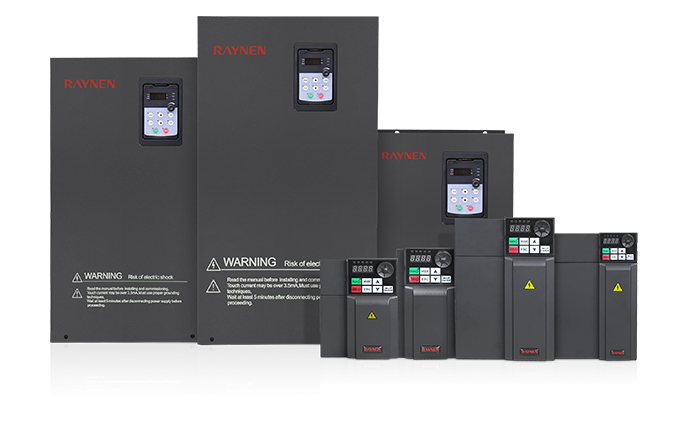
Not every application needs a large cabinet drive. Compact vector drives are often used on small conveyors, packaging lines, and standalone pumps where panel space is tight. The RVE21 Smart series is designed for that kind of everyday integration.
 RVE21 Smart Compact Low-Voltage AC DriveA compact 380 V, 7.5–15 kW vector VFD for small conveyors, packaging lines, and standalone pumps where panel space is limited.View Product →
Machine tools, cranes, and winders sit at the other end of the scale. They benefit from closed-loop vector control when positioning accuracy, low-speed holding torque, or rapid acceleration is part of the duty cycle.
A Practical Selection Checklist
Drive selection starts with the motor and the load, not with a catalog page. A useful checklist looks like this:
- Record motor nameplate data, insulation class, and cable length.
- Define the load torque curve and the starting torque required.
- Set the minimum and maximum speed the process actually needs.
- Check duty cycle, overload margin, and ambient temperature.
- Confirm enclosure, cooling, dust, humidity, and altitude limits.
- Plan EMC, grounding, shielding, and separation of power and signal cables.
- List braking, regeneration, communications, and I/O requirements.
When medium voltage makes sense
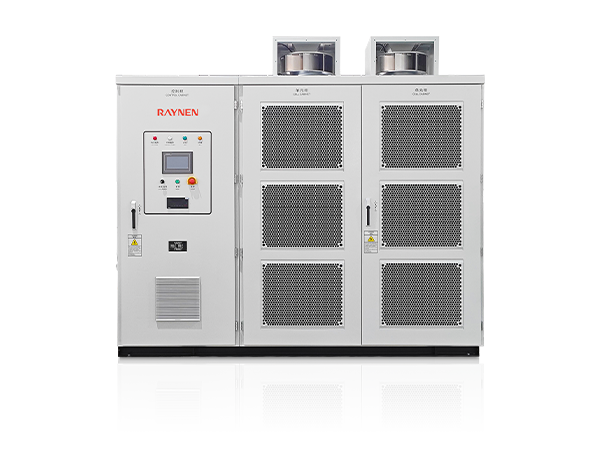
At higher power ratings, medium-voltage drives reduce current and cable size, which can simplify installation and lower losses. They are not automatically the better choice; compare efficiency, spare parts, service access, and the cost of the complete system before deciding. The RVE1000 medium-voltage series is available for applications where that voltage class is already part of the plant design.
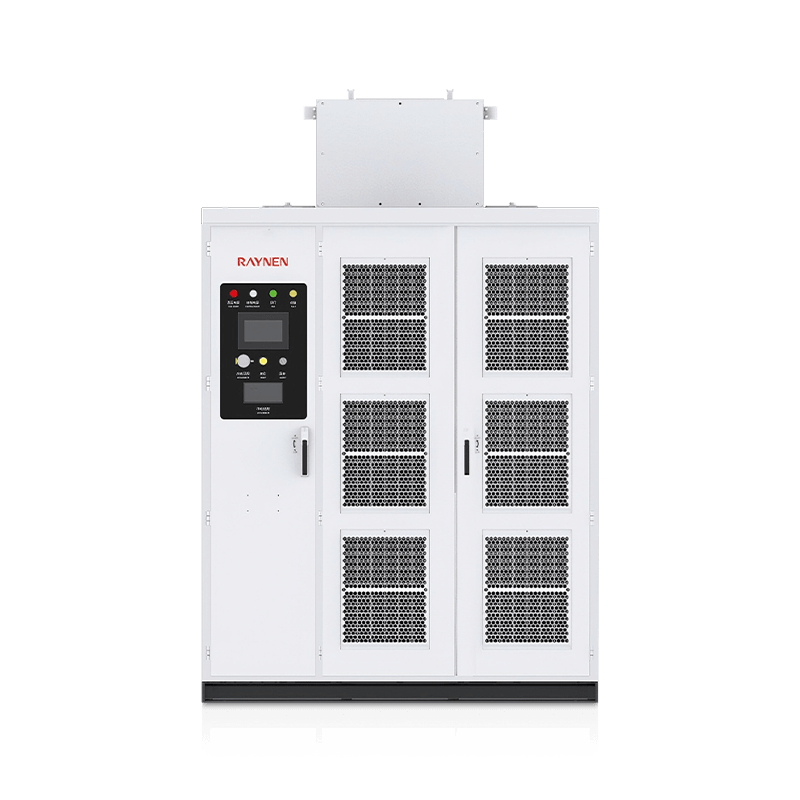 RVE1000 Medium Voltage AC Drive SeriesA medium-voltage VFD series for direct high-voltage motor drive, available in 6 kV and 10 kV ranges for plant designs already using that voltage class.View Product →
Do not choose medium voltage just because the motor is large. Choose it when the plant voltage, cable run, and maintenance strategy make it the practical option.
Commissioning and Maintenance That Prevent Surprises
Good commissioning starts with a motor tune, correct parameter set, and a no-load test before the drive is connected to the process. Check rotation, acceleration, deceleration, and fault behavior under realistic load. Our technical support team can help review settings when an application is unusual.
After commissioning, maintenance is mostly about heat, dust, and connections. Keep cooling fans and filters clean, check terminal torque, and record DC bus values over time. Capacitors and fans age, so planned replacement is cheaper than an unplanned stop.
Common Mistakes to Avoid
- Sizing by motor kW alone without checking the load torque curve.
- Skipping motor auto-tune and then blaming the drive for poor low-speed performance.
- Ignoring cable length, shielding, and grounding until EMC faults appear.
- Expecting full torque at zero speed without encoder feedback.
- Forgetting harmonics, power quality, and spare parts planning.
Most of these issues are easier to solve during selection than after startup. A short checklist and a realistic load profile save more time than a rushed order.
A Drive Is Only as Good as Its Setup
Vector AC drives give you precise motor control, strong low-speed torque, and a practical path to energy savings, but they are not plug-and-play magic. Match the control method to the load, tune the motor model, and commission the installation with care. When those basics are right, the drive becomes a quiet, reliable part of the process rather than a source of trips and callbacks.
Previous Post
No previous article
Next Post
Smart Low-Voltage AC Drives: Features, Benefits, and Selection Factors

Copyright 2024 Fujian Raynen Technology Co.,Ltd. All Rights Reserved.
Privacy Policy  Motor Control Manufacturers