English
 Español
 عربى
عربى
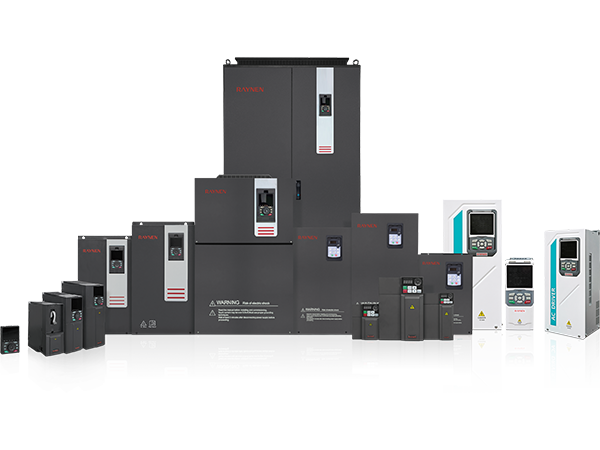
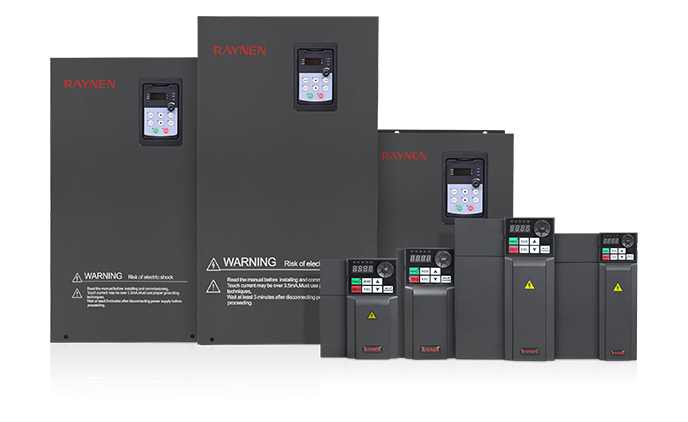
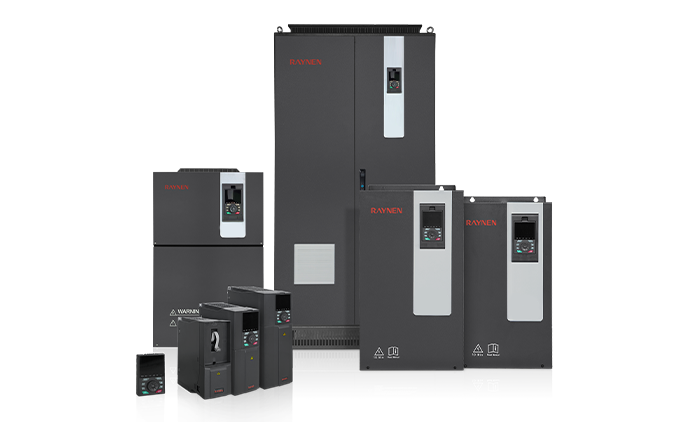
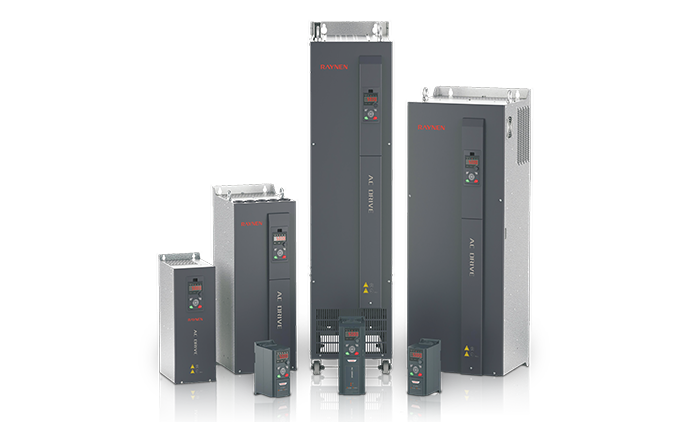













1.Introduction to AC Drives (Variable Frequency Drives) In the realm of modern industrial control an......
READ MOREHome / News / Industry News / AC Servo Motor Explained: How It Works, Types, and How to Choose the Right One
AC Servo Motor Explained: How It Works, Types, and How to Choose the Right One
Content
- 1 What Is an AC Servo Motor?
- 2 How an AC Servo Motor Works
- 3 Types of AC Servo Motors
- 4 Key Specifications You Need to Understand
- 5 AC Servo Motor vs Stepper Motor: Which Should You Use?
- 6 Common Applications of AC Servo Motors
- 7 How to Choose the Right AC Servo Motor
- 8 Wiring and Installation Basics
- 9 Servo Drive Tuning: Getting the Best Performance
- 10 Maintenance and Troubleshooting Tips
What Is an AC Servo Motor?
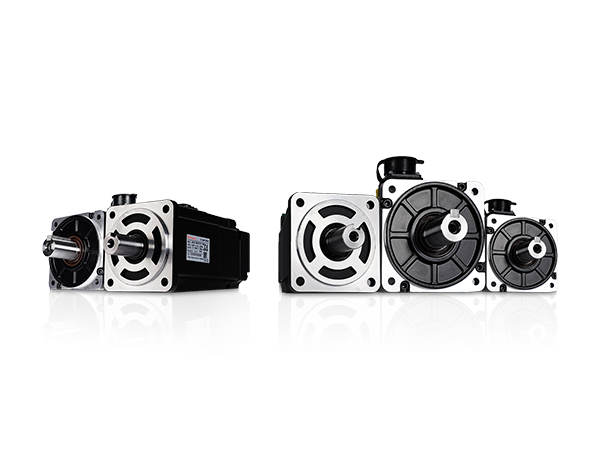
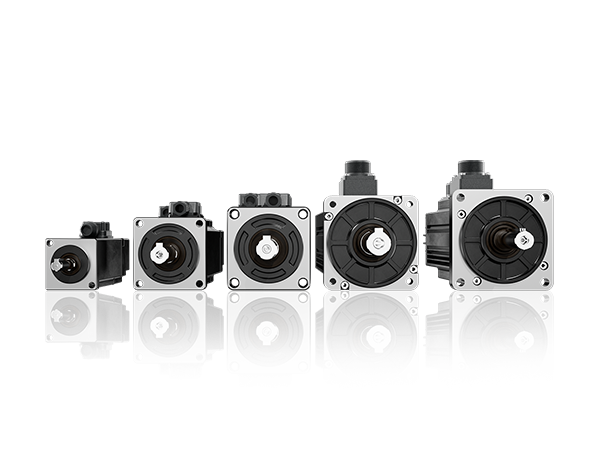
An AC servo motor is a type of electric motor that runs on alternating current and is designed to provide precise control over position, speed, and torque. Unlike a regular AC motor that just spins at a fixed speed, a servo motor constantly receives feedback from an encoder attached to its shaft. That feedback tells the system exactly where the motor is at any given moment, allowing it to make real-time corrections and hold its target position with high accuracy.
The word "servo" comes from the Latin word for slave — and that's essentially what it does. It faithfully follows commands from a controller, adjusting itself continuously to match whatever position, speed, or torque is demanded. This makes AC servo motors the backbone of modern automation, CNC machines, robotics, and any application where precision movement matters.
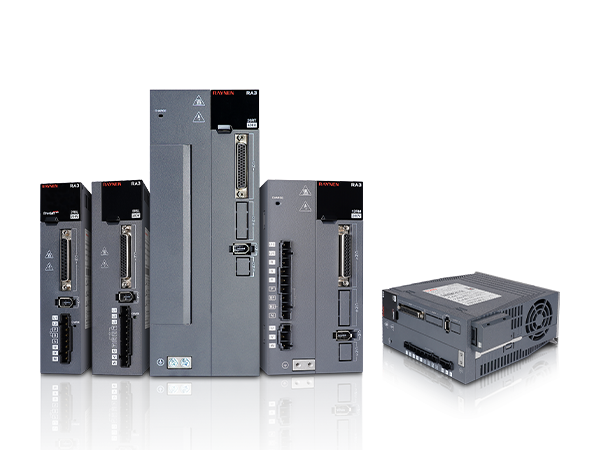
What separates an AC servo motor from a DC servo motor is the power source and construction. AC servo motors are generally more durable, require less maintenance (no brushes to replace), and are better suited for high-speed, high-power industrial environments. They are almost always used together with a servo drive (also called a servo amplifier) and a motion controller to form a complete closed-loop servo system.
How an AC Servo Motor Works
The core principle behind an AC servo motor is closed-loop feedback control. Here's a straightforward breakdown of how the system operates from start to finish:
- Command input: A motion controller (PLC, CNC controller, or PC) sends a target value — such as "rotate 90 degrees" or "spin at 3,000 RPM" — to the servo drive.
- Servo drive output: The servo drive converts the command into a precisely controlled AC voltage and current, which is fed to the motor.
- Motor movement: The motor's rotor moves in response to the electromagnetic field created by the stator windings.
- Encoder feedback: A rotary encoder mounted on the motor shaft continuously measures the actual position and speed, sending this data back to the servo drive.
- Error correction: The drive compares the actual position to the commanded position and instantly adjusts the output to eliminate any difference (called the "error").
This loop runs hundreds or thousands of times per second, which is why servo systems can achieve such tight tolerances. The encoder is a critical component — most modern AC servo motors use high-resolution encoders with 17-bit or 23-bit resolution, meaning they can detect millions of distinct positions per revolution.
Types of AC Servo Motors
There are two main types of AC servo motors used in industry today, each with different operating principles and ideal use cases.
Synchronous AC Servo Motor (PMSM)
The synchronous AC servo motor — also known as a Permanent Magnet Synchronous Motor (PMSM) — uses permanent magnets embedded in the rotor. The rotor spins in exact synchronization with the rotating magnetic field in the stator. Because the magnets are always engaged, this type of motor produces high torque even at low speeds and has excellent dynamic response.
Synchronous servo motors are by far the most common type used in industrial automation and CNC applications. They are compact, efficient, and capable of maintaining rated torque across a wide speed range. Brands like Mitsubishi, Fanuc, Yaskawa, and Siemens all offer synchronous servo motors as their primary product line.
Induction AC Servo Motor (Asynchronous)
The induction servo motor uses a squirrel-cage rotor where current is induced by the rotating magnetic field — there are no permanent magnets. The rotor always lags slightly behind the stator field (this is called "slip"), which is how torque is generated. When paired with a vector-control servo drive, induction motors can also achieve good speed and torque control, though typically not as precise or responsive as synchronous types.
Induction servo motors are often chosen for high-power spindle applications, such as CNC milling machine spindles, where very high speeds and ruggedness matter more than ultra-precise positioning. They are also less expensive at larger power ratings.
Key Specifications You Need to Understand
Before selecting or working with any AC servo motor, you need to understand the core specs on the datasheet. Here's a plain-language breakdown of the most important parameters:
| Specification | What It Means | Why It Matters |
| Rated Torque (N·m) | Continuous torque the motor can produce at rated speed | Must exceed the load torque including friction and inertia |
| Peak Torque (N·m) | Maximum torque for short bursts (typically 2–3× rated) | Needed for acceleration and deceleration phases |
| Rated Speed (RPM) | The normal operating speed at rated torque | Determines if the motor suits your motion profile |
| Rated Power (W or kW) | Output mechanical power (torque × speed) | Used to match the drive and size cables/breakers |
| Encoder Resolution | Number of pulses or bits per revolution | Higher resolution = finer position control |
| Rotor Inertia (kg·cm²) | Resistance of the rotor to changes in rotational speed | Must be matched with load inertia for stable control |
| IP Rating | Protection level against dust and water ingress | Critical for harsh or wet environments |
AC Servo Motor vs Stepper Motor: Which Should You Use?
One of the most common questions in motion control is whether to use an AC servo motor or a stepper motor. Both can control position, but they work very differently and suit different applications.
A stepper motor moves in fixed increments (steps) and operates open-loop — meaning there's no encoder feedback in most basic setups. It's simple, cheap, and works well for light loads at moderate speeds. However, steppers can miss steps under overload conditions without any self-correction, and they lose significant torque at higher speeds.
An AC servo motor, by contrast, always knows exactly where it is thanks to the encoder. It won't lose position under load, responds faster to commands, and maintains full torque across a wide speed range. The tradeoff is cost and complexity — a servo system (motor + drive + cables + tuning) costs significantly more than a stepper setup of equivalent size.
Here's a simple rule of thumb: use a stepper for simple, low-load, low-speed positioning where cost is critical. Use an AC servo motor when you need high speed, high torque, dynamic load changes, or when position accuracy is non-negotiable.

Common Applications of AC Servo Motors
AC servo motors show up in almost every industry where controlled motion is required. Some of the most common applications include:
- CNC Machining Centers: Servo motors drive the X, Y, and Z axes of milling machines and lathes, as well as the spindle in some configurations. They allow the machine to cut complex shapes with micron-level accuracy.
- Industrial Robots: Each joint of a 6-axis robot arm is typically driven by its own servo motor. The coordinated control of all joints allows fluid, precise movement along complex paths.
- Packaging Machines: Servo motors control the indexing, cutting, sealing, and filling operations in high-speed packaging lines, where repeatability and speed are essential.
- Semiconductor Manufacturing: Wafer handling, pick-and-place systems, and inspection equipment rely on servo motors for nanometer-level positioning repeatability.
- Printing and Converting: Register control in printing presses and tension control in web-handling systems depend on servo motors to maintain consistent material feed.
- Medical Equipment: CT scanners, surgical robots, and infusion pumps use small, precise servo motors to ensure safe, accurate operation.
How to Choose the Right AC Servo Motor
Choosing the right AC servo motor comes down to carefully matching the motor's capabilities to your application's demands. Rushing this step leads to either an underpowered system that fails in the field or an oversized, overpriced solution. Follow these steps:
Step 1 — Define Your Load Requirements
Start by calculating the load torque, which includes the force or weight being moved, friction, and any mechanical transmission (gearbox, belt, ballscrew). Also calculate the load inertia — this tells you how much energy the motor must provide to accelerate the load. A general industry guideline is to keep the load-to-motor inertia ratio below 10:1 for good control stability, and ideally 3:1 or less for high-dynamic applications.
Step 2 — Define Your Motion Profile
Sketch out a speed vs. time graph for your motion cycle. Note the peak speed required, the acceleration and deceleration times, and the duty cycle (how long the motor runs continuously vs. rests). This determines both the peak torque needed (during acceleration) and the RMS (root mean square) torque, which must stay below the motor's rated continuous torque to avoid overheating.
Step 3 — Select the Motor Frame and Power Rating
Once you know your torque and speed requirements, select a motor with a rated torque and rated speed that comfortably covers your needs with some margin (typically 20–30%). Also confirm the physical frame size fits your mounting space — servo motors are usually available in flange sizes from 40mm up to 200mm or larger.
Step 4 — Match the Servo Drive
The servo drive must be matched to the motor's voltage, current, and encoder type. Most manufacturers sell matched motor-drive sets (e.g., Yaskawa Sigma series, Mitsubishi MR-J series, Siemens S-1FK series) which simplifies setup. If mixing brands, carefully verify compatibility across voltage rating, encoder protocol (incremental, absolute, EnDat, BiSS-C, etc.), and control interface (pulse/direction, analog ±10V, EtherCAT, PROFINET, etc.).
Step 5 — Consider Environmental Conditions
Check the operating environment. If the motor will be exposed to coolant, dust, or washdowns, you need an IP65 or IP67 rated motor. If it will operate in extreme temperatures, verify the motor's ambient temperature range. For food and beverage or pharmaceutical applications, stainless steel shaft seals and special coatings may be required.
Wiring and Installation Basics
Installing an AC servo motor correctly is just as important as choosing the right one. A few key points to keep in mind:
- Separate power and signal cables: Always route the motor power cable (U, V, W phases) separately from the encoder feedback cable. Running them in the same conduit can cause interference that destabilizes the control loop.
- Use shielded cables: Both the power cable and encoder cable should be shielded, with the shield grounded at one end (typically the drive end) to prevent noise pickup.
- Ground the motor body: The motor housing must be connected to the machine frame ground to prevent electrical shock and reduce EMI emissions.
- Check phase sequence: The U, V, W connections must match between the motor and drive. If the motor runs in the wrong direction, swap any two phase wires — never swap encoder wires to fix direction.
- Use a dynamic brake resistor: For motors driving vertical loads or requiring fast stops, an external braking resistor connected to the drive absorbs regenerative energy during deceleration and prevents overvoltage faults.
Servo Drive Tuning: Getting the Best Performance
After wiring, the servo drive needs to be tuned so the control loop responds correctly for your specific motor-load combination. Most modern servo drives include an auto-tuning function that spins the motor through a test routine and automatically calculates optimal gain settings. This is usually good enough for standard applications.
For demanding applications — such as high-speed pick-and-place or precision grinding — manual tuning of the three main PID gains (position gain, velocity gain, and integral gain) may be required. Increasing the gains makes the system respond faster and stiffer, but too high and the system becomes unstable and oscillates. The goal is to achieve fast response without overshoot or hunting.
Most drives also allow you to set notch filters to suppress mechanical resonance frequencies, feedforward gains to improve tracking accuracy during acceleration, and friction compensation to reduce position error at low speeds. Taking the time to tune these settings properly can make a significant difference in the final positioning accuracy and throughput of the machine.
Maintenance and Troubleshooting Tips
AC servo motors are generally very reliable because they have no brushes or commutator to wear out. However, some maintenance is still needed over time:
- Bearing replacement: The motor bearings are the most common wear item. Most manufacturers specify bearing replacement intervals based on operating hours — typically every 20,000 to 30,000 hours. Excessive vibration or noise is an early sign of bearing wear.
- Encoder cable inspection: Encoder cables are often flexed repeatedly (especially on robot arms or gantry systems) and can develop internal breaks over time. If a servo starts showing erratic position errors or faults, suspect the encoder cable first.
- Overheating checks: If the motor runs hot, verify that the duty cycle is within spec, that the ambient temperature is acceptable, and that the motor surface is clean and not obstructed. Sustained overheating degrades the winding insulation and shortens motor life.
- Drive alarm codes: When a fault occurs, always read the alarm code from the servo drive display or software. Common codes include overvoltage, overcurrent, encoder error, overload, and position deviation excess. Each points you directly to the root cause.
Keeping a maintenance log of motor running hours, alarm history, and any physical inspections goes a long way toward predicting failures before they cause unplanned downtime.
Previous Post
AC Servo Drive Explained: How It Works, How to Choose One, and How to Get the Most Out of It
Next Post
Medium-Voltage Variable Frequency Drive Explained: How It Works, Which Topology to Choose, and What to Specify

Copyright 2024 Fujian Raynen Technology Co.,Ltd. All Rights Reserved.
Privacy Policy  Motor Control Manufacturers