English
 Español
 عربى
عربى






1.Introduction to AC Drives (Variable Frequency Drives) In the realm of modern industrial control an......
READ MOREHome / News / Industry News / Low-Voltage AC Drives Explained: How They Work and How to Choose One for Your Application
Low-Voltage AC Drives Explained: How They Work and How to Choose One for Your Application
Walk through almost any modern plant and you will find low-voltage AC drives doing quiet, unglamorous work: holding a pump at exactly the pressure the process needs, ramping a conveyor without snapping the belt, or trimming a fan's speed by fifteen percent and cutting its power draw by more than a third. They are the link between a fixed-speed mains supply and a motor that should really run at whatever speed the job demands.
At Raynen, we have spent years building drives for OEM machines, plant retrofits and heavy industry. This guide answers the questions our engineers hear most often: what is inside a low-voltage AC drive, how the main types compare, which selection criteria matter, and where the payback actually comes from.
Content
- 1 What Counts as a Low-Voltage AC Drive?
- 2 How a Low-Voltage AC Drive Works
- 3 Types of Low-Voltage AC Drives
- 4 Drive or Soft Starter?
- 5 Choosing the Right Drive
- 6 Where Low-Voltage AC Drives Deliver Results
- 7 Energy Efficiency, Reliability and Power Quality
- 8 Commissioning, Documentation and Support
- 9 Frequently Asked Questions
What Counts as a Low-Voltage AC Drive?
Low voltage describes the supply the drive connects to, not the power it delivers. Under IEC definitions, low voltage runs up to 1,000 V AC, and industrial drives are built for 200 V, 380-480 V or 525-690 V networks. The 380-480 V class is the workhorse, covering the overwhelming majority of motors from fractional kilowatt sizes up to several hundred kilowatts. Medium-voltage drives take over from roughly 2.3 kV and serve very large machines.
Terminology causes most of the confusion. VFD, VSD and "inverter" all describe the same box. Strictly speaking, the inverter is only one internal stage; the complete product is an AC drive, and low-voltage AC drives are simply those designed for the low-voltage class.
How a Low-Voltage AC Drive Works
Every low-voltage AC drive performs the same transformation: it takes fixed-frequency, fixed-voltage AC from the grid and delivers variable-frequency, variable-voltage AC to the motor. Three stages do the work.
- Rectifier. Diode bridges, or an active front end on regenerative units, convert incoming three-phase AC into DC.
- DC bus. Capacitors and, on larger units, a DC choke smooth the link and store energy for transient loads.
- Inverter. IGBT modules switch the DC link back into a pulse-width-modulated AC waveform whose frequency and voltage the control board sets.
Because an induction motor's synchronous speed follows supply frequency, changing frequency changes speed directly. Dropping frequency without dropping voltage would saturate the magnetic circuit, so the drive keeps the volts-per-hertz ratio, or a more advanced motor model, balanced at every operating point.
Control Methods You Will See
- V/f control: simple, forgiving and well matched to fans, pumps and other quadratic loads.
- Sensorless vector control: encoder-free torque response for conveyors, mixers and extruders.
- Closed-loop vector control: encoder feedback for precise speed and torque on cranes, winders and machine tools.
Types of Low-Voltage AC Drives
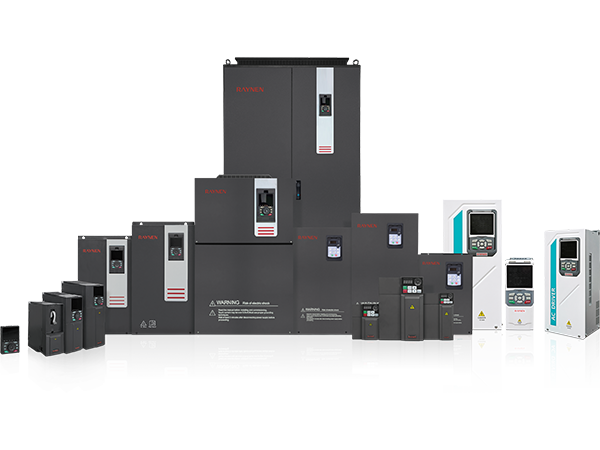
The market splits into a few practical families. Wall-mounted enclosed drives dominate from roughly 0.4 kW to 90 kW and sit beside the machine or inside a small panel. Modular and cabinet-built drives cover higher powers and let shared DC buses, braking units and filters be configured to the application. Multi-drive systems feed several inverters from one rectifier, which is common on textile, packaging and metal lines. Regenerative drives return braking energy to the supply instead of burning it in a resistor.
For most everyday duties, a compact wall-mounted unit is enough, and it keeps the panel small.
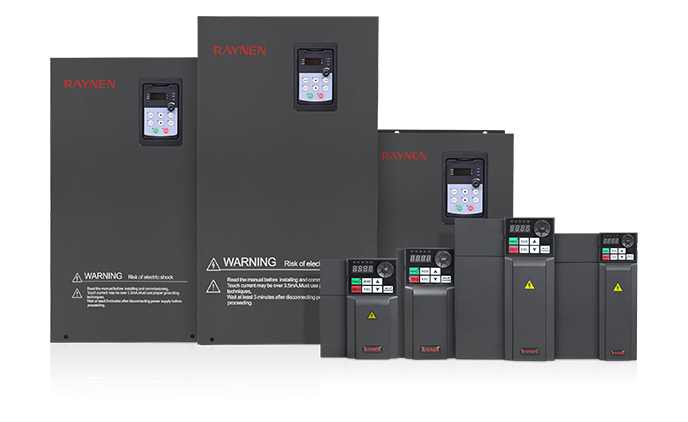
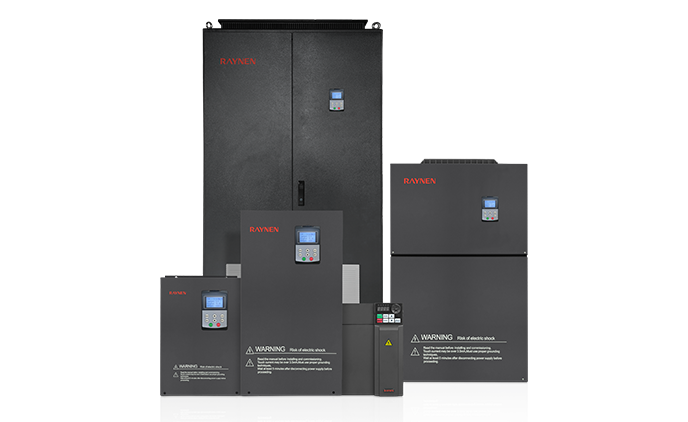
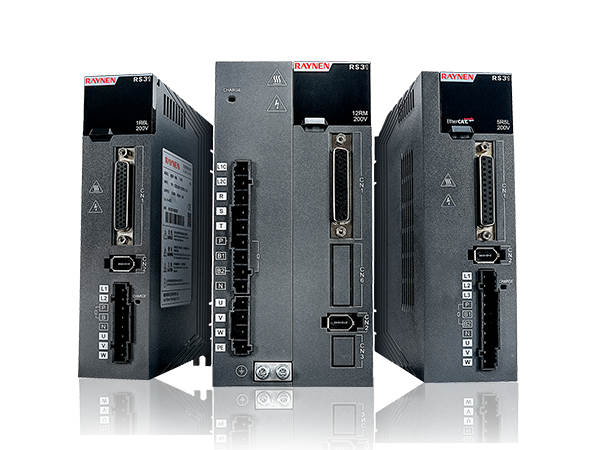
 RVE21 Smart Low-Voltage AC Drives Suppliers• Wide voltage range design • Up to 200% overload capability • Removable functional shield, side-by-side installation • Independent airway design • High cost performanceView Product →
Our RVE21 Smart low-voltage variable frequency drive was designed for exactly that situation: OEM machines and retrofits where panel space is tight, wiring has to be quick, and the drive still has to cover a broad range of motor sizes.
Drive or Soft Starter?
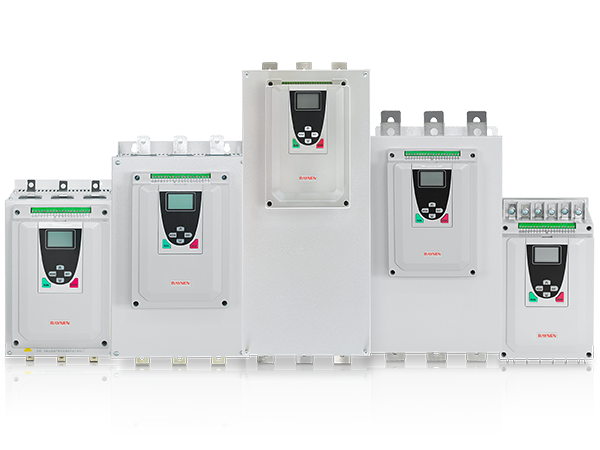
Both devices sit in front of a motor and both control the ramp, so they are often quoted against each other. The deciding question is whether you need to change speed after the motor has started.
| Aspect | Low-voltage AC drive | Low-voltage soft starter |
|---|---|---|
| Speed control | Continuous, from zero to rated speed | Fixed speed after the ramp |
| Typical starting current | About 100-150% of rated | 250-400% of rated |
| Energy saving on fans and pumps | Substantial when speed is trimmed | Limited, since speed stays fixed |
| Best fit | Processes that vary flow, pressure or line speed | Simple, high-inertia starting duties |
If the process never needs a different speed, a soft starter is usually the cheaper answer. If speed, torque or energy consumption must follow demand, a drive is the better investment.
Choosing the Right Drive
Datasheet power ratings are a starting point, not an answer. Work through the load first.
- Motor current and overload: size on full-load current, then check whether the duty needs 120%, 150% or 200% overload for a minute or more.
- Load torque profile: constant-torque loads such as conveyors and extruders ask more of a drive than quadratic fan and pump loads.
- Speed range: constant-power operation above base speed requires field weakening and a motor rated for it.
- Braking: decide whether a braking resistor, a braking unit or a regenerative front end is required.
- Environment: ambient temperature, altitude, dust, humidity and the required IP rating all reduce usable output current.
- Power quality: harmonic limits, cable length and EMC category usually determine whether chokes or filters are added.
- Integration: fieldbus protocol, I/O count and whether the drive must talk to an existing control platform.
Where the load is heavy or the dynamics are tight, a vector drive with proper motor autotuning is the safer choice.
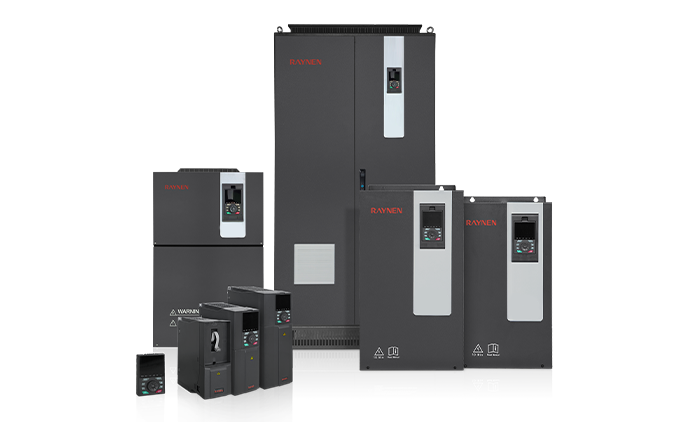
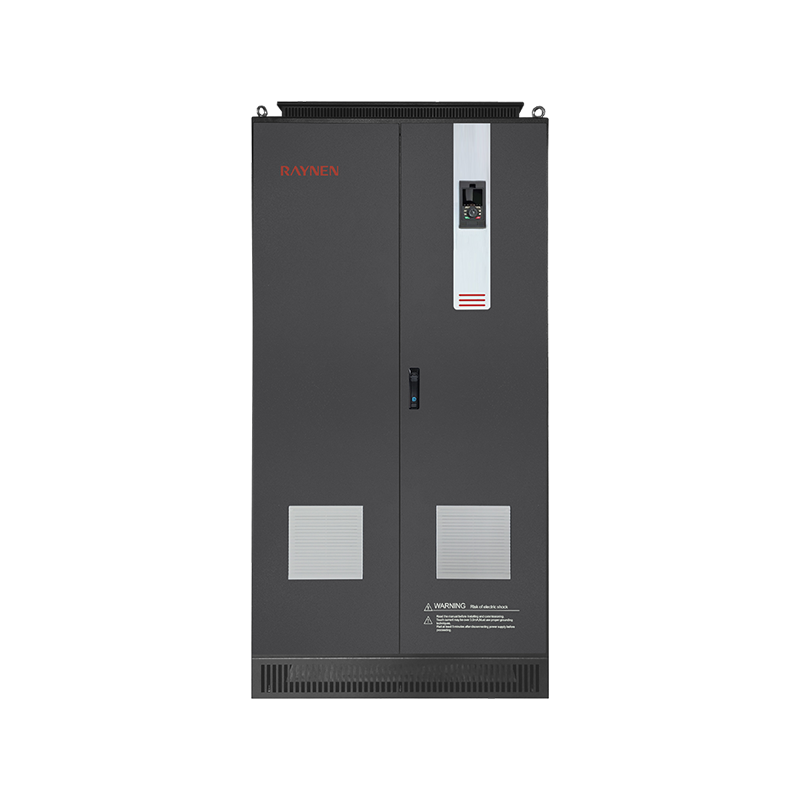 RVE32 Vector AC Drives SuppliersPlastic Shell • Speed sensorless vector control technology • Automatic loop parameter adaptation, no debugging required • Modbus communication as standard • Low-power ...View Product →
The RV32 vector variable frequency drive is our answer to those duties: open- or closed-loop vector control, generous overload capability, and the braking and communication options machinery builders ask for.
Where Low-Voltage AC Drives Deliver Results
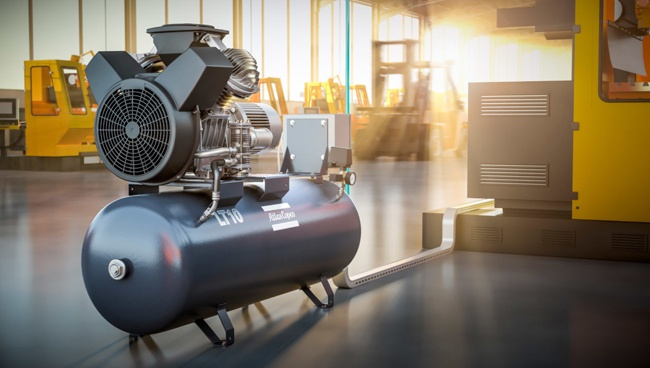
Applications cluster around a few patterns. In fan and pump systems the drive replaces a throttling valve or damper, so the motor produces only the flow the process needs. On compressors, drives cut unloading losses and keep pressure steady. In chemical plants they tame centrifuges and mixers that would otherwise shock the gearbox at every start. Rubber and plastics lines use them on screw extruders, while lifting equipment and machine tools rely on them for controlled acceleration and repeatable positioning.
Water treatment blowers, submersible pumps and constant-pressure supply systems follow the same logic. You can see how these duties are configured in our fan and pump application solutions.
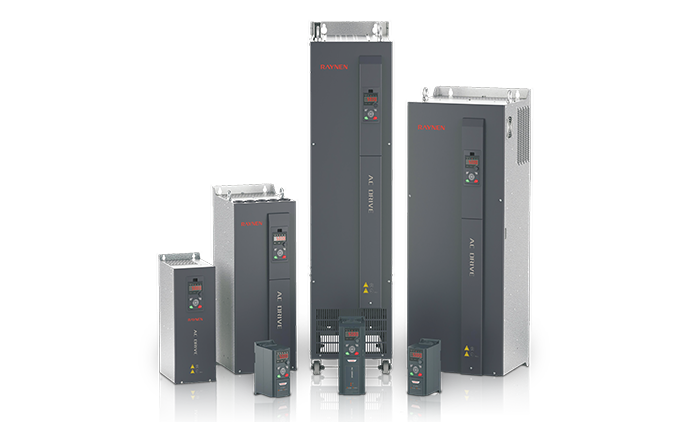
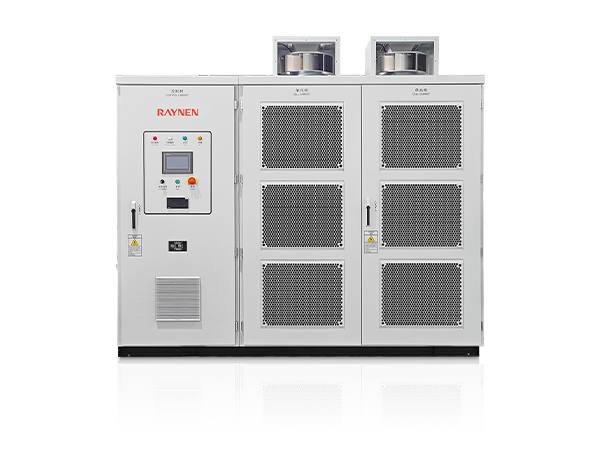
 CT3000 Series AC Drives SuppliersCT3000 Series Variable Frequency Drive 400V 560-800kWView Product →
The CT3000 series variable frequency drive covers general-purpose duties across these industries, which makes it a sensible starting point when a project mixes several machine types under one spare-parts strategy.
Energy Efficiency, Reliability and Power Quality
Affinity laws explain most of the savings story: in centrifugal loads, flow varies with speed while shaft power varies with the cube of speed. A twenty percent speed reduction therefore cuts power by roughly half. That is why retrofit projects on fans and pumps usually repay the drive within one to three years.
Reliability comes from protection plus good installation. Modern drives monitor output current, DC bus voltage, heatsink temperature and earth leakage, and they limit torque rather than trip whenever the process allows. Harmonics and EMC still need attention: DC or AC chokes reduce current distortion, shielded motor cable and correct earthing control common-mode noise, and cable length limits protect motor insulation from fast switching edges.
Commissioning, Documentation and Support
Good commissioning is mostly preparation. Enter the motor nameplate data first, run autotuning, then set acceleration and deceleration ramps around the real inertia before the drive sees a load. Bond the motor cable screen at both ends, keep control wiring away from power wiring, and record the final parameter set so a replacement unit can be loaded quickly.
Maintenance stays straightforward when it is scheduled: clean the heatsink and cooling fan, check DC bus capacitors after long service, verify terminal torque annually, and use thermal imaging to catch loose connections early. Our user manuals and downloads carry the parameter lists, wiring diagrams and firmware documents needed for both tasks.
Frequently Asked Questions
Can a low-voltage AC drive hold a motor at zero speed?
Yes, it can hold a shaft stationary while producing torque, but the motor must be rated for continuous duty at low speed. Standard self-cooled motors lose their cooling airflow as speed falls, so plan for a separately ventilated motor if the holding duty is long.
How far can the motor cable run from the drive?
As a rule of thumb, up to roughly 30-50 m unshielded or 20-30 m shielded. Longer runs need a dV/dt filter or output reactor to protect the motor winding from steep switching edges.
Do I always need a braking resistor?
No. It is only necessary when the load regenerates energy faster than the drive can absorb it, for example when stopping a high-inertia fan quickly or lowering a hoist. Slow ramp-downs and low-inertia loads often need nothing extra.
Low-voltage AC drives reward careful matching more than any single specification. Get the torque profile, the overload requirement and the environment right, and the drive becomes a maintenance-free part of the machine rather than a recurring problem.
If you want a second opinion on an application, from a pump curve to a retrofit, our engineers are happy to help you size it, set it up and keep it running for years.
Previous Post
No previous article
Next Post
Complete Guide to Low Voltage AC Drives: Selection, Applications, and Buying Tips

Copyright 2024 Fujian Raynen Technology Co.,Ltd. All Rights Reserved.
Privacy Policy  Motor Control Manufacturers